Through the Green Tunnel: Sri Lanka by Rail
The Slow Way
In an age of domestic flights and air-conditioned minivans, Sri Lanka's railway is an anachronism — and that is precisely its value. The trains are slow, the seats are hard, and the schedules are suggestions rather than promises. But the railway goes where the roads don't, through valleys and along ridges that no highway engineer would attempt.
The network was built by the British between 1858 and 1926, primarily to move tea and coffee from the highlands to the port of Colombo. Today it moves people — commuters, pilgrims, tourists, and schoolchildren — through some of the most dramatic scenery in South Asia.
The Northern Line
While the Kandy-Ella route gets the attention, the recently restored northern line to Jaffna is the journey that moves you. The train passes through landscape still marked by thirty years of civil war — rebuilt towns, new temples beside ruined ones, stretches of empty land where communities once stood.
At Kilinochchi, a group of schoolgirls boarded the train, laughing and sharing rice packets wrapped in banana leaves. Their normalcy was the most powerful thing we witnessed on the entire trip.
Between the Trees
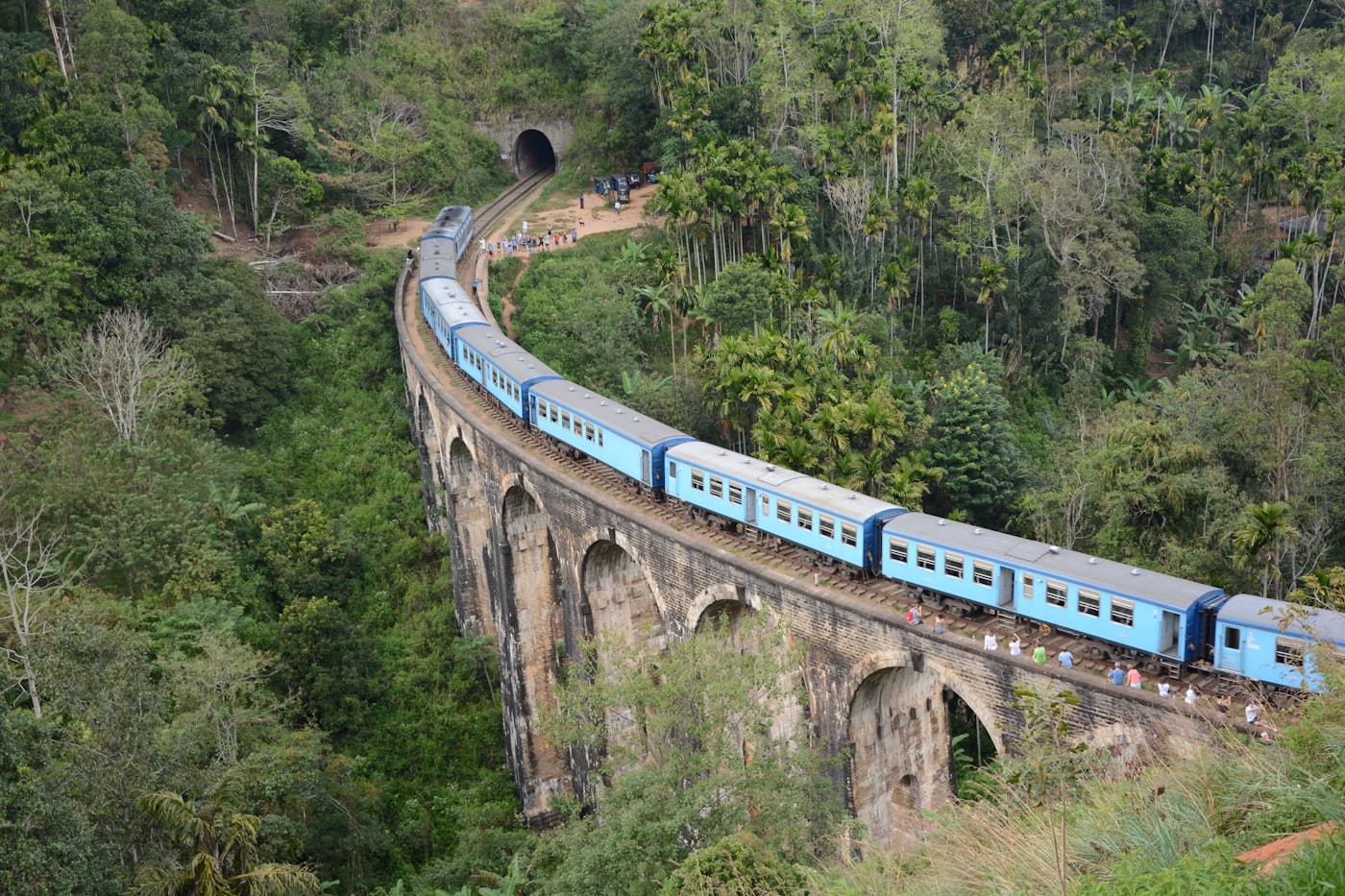
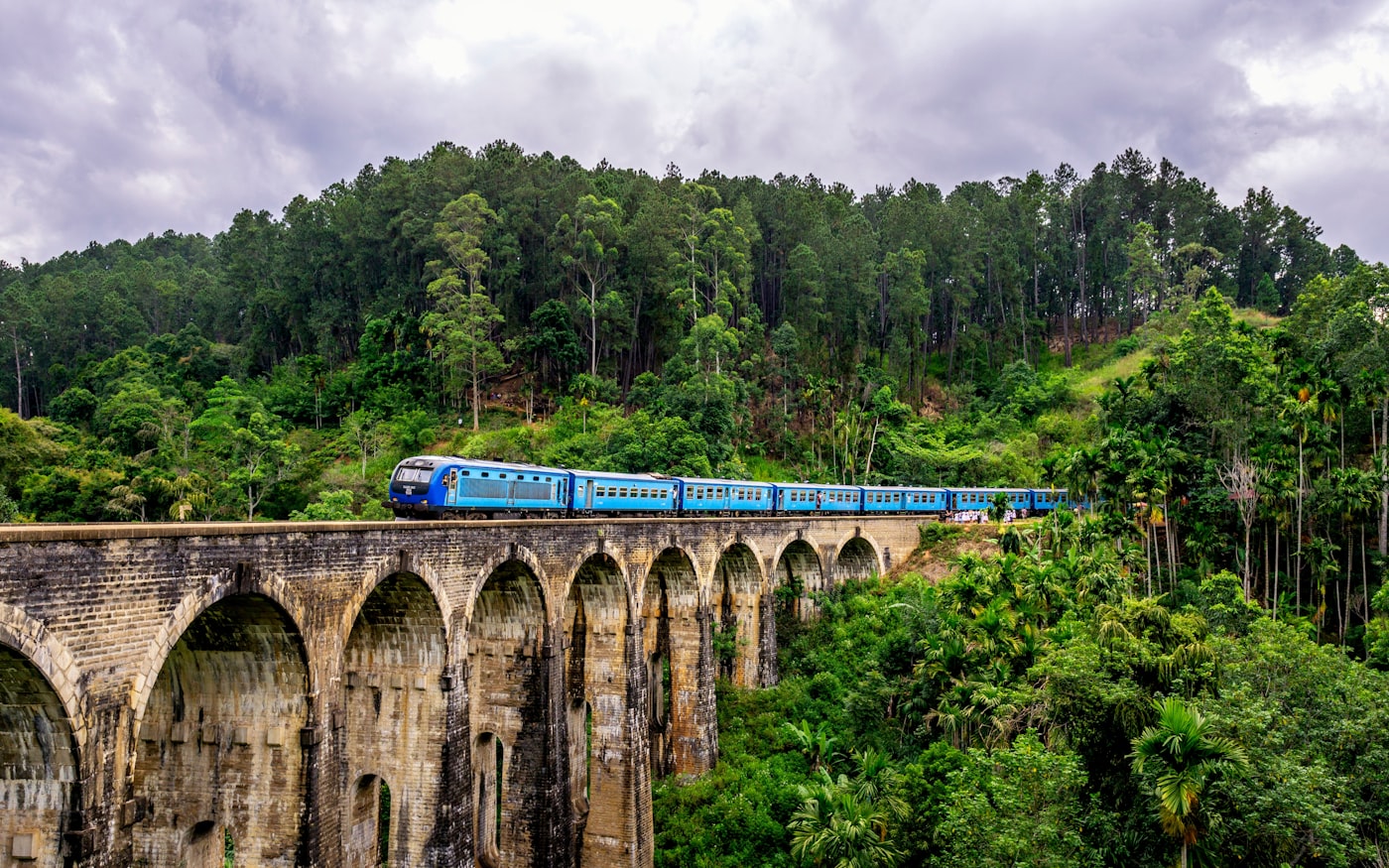
There are stretches of the hill country line where the forest closes over the track completely — a green tunnel of tropical vegetation through which the blue train moves like a thread through fabric. Ferns brush the windows. Monkeys scatter from the trackside. The light filters through the canopy in shifting patterns.
These sections, between Hatton and Nanu Oya, are not on any list of attractions. They're just stretches of track through forest. But they contain a quality of beauty that the famous viewpoints — for all their drama — cannot match.
"The train doesn't show you Sri Lanka. It lets Sri Lanka show itself to you, slowly, on its own terms." — Fellow passenger, second class
Railway Essentials
- Book ahead: Observation and first-class seats sell out weeks in advance
- Second class: Unreserved, but arrive early for a window seat
- Food: Railway station wadey (lentil fritters) are a national institution
- Photography: Doors stay open on most trains — lean out carefully for the best shots
- Time: Add 30-60 minutes to every scheduled arrival time and you'll never be disappointed