Nine Arches: The Bridge Built on Faith
A Monument to Stubbornness
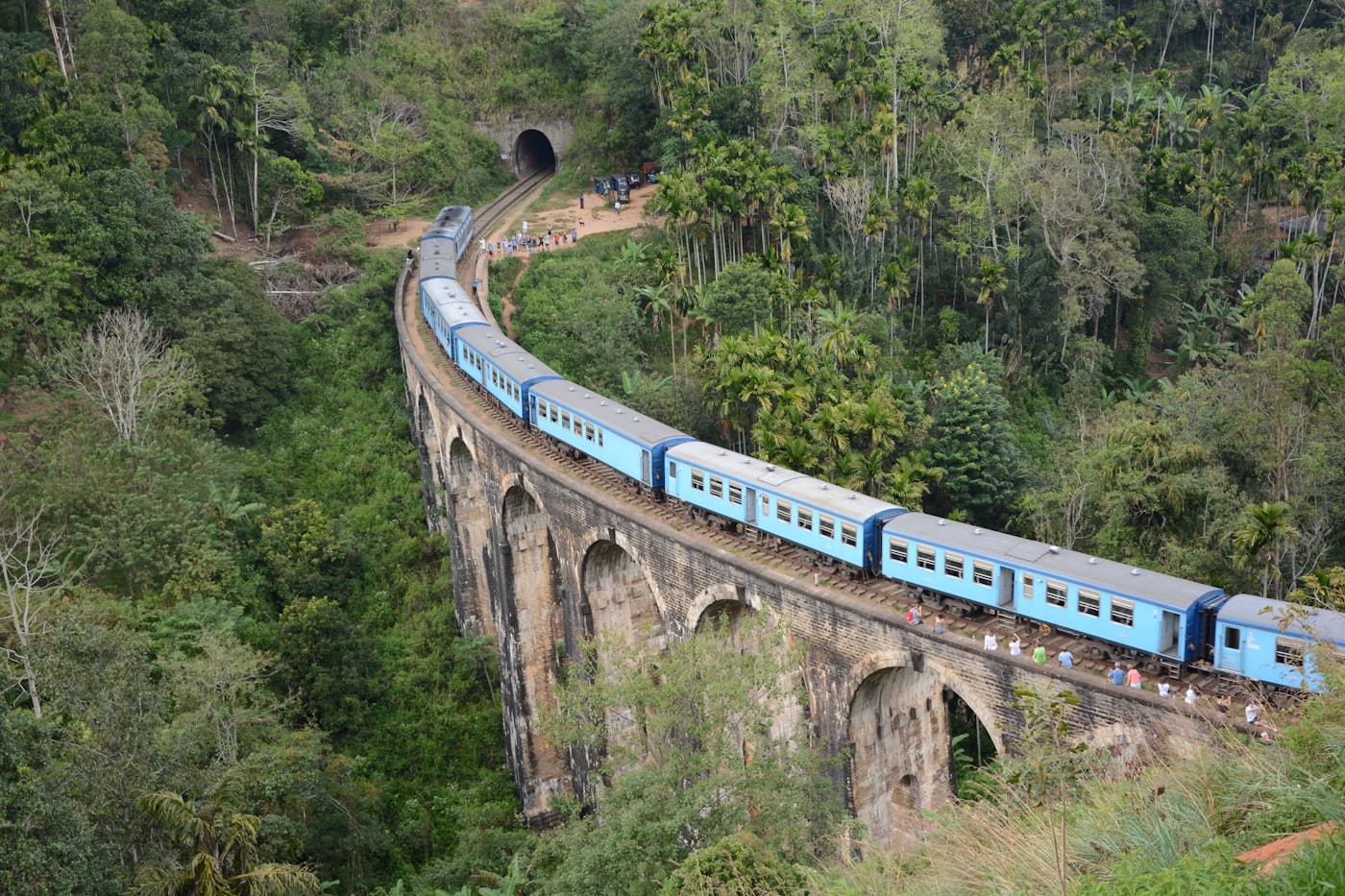
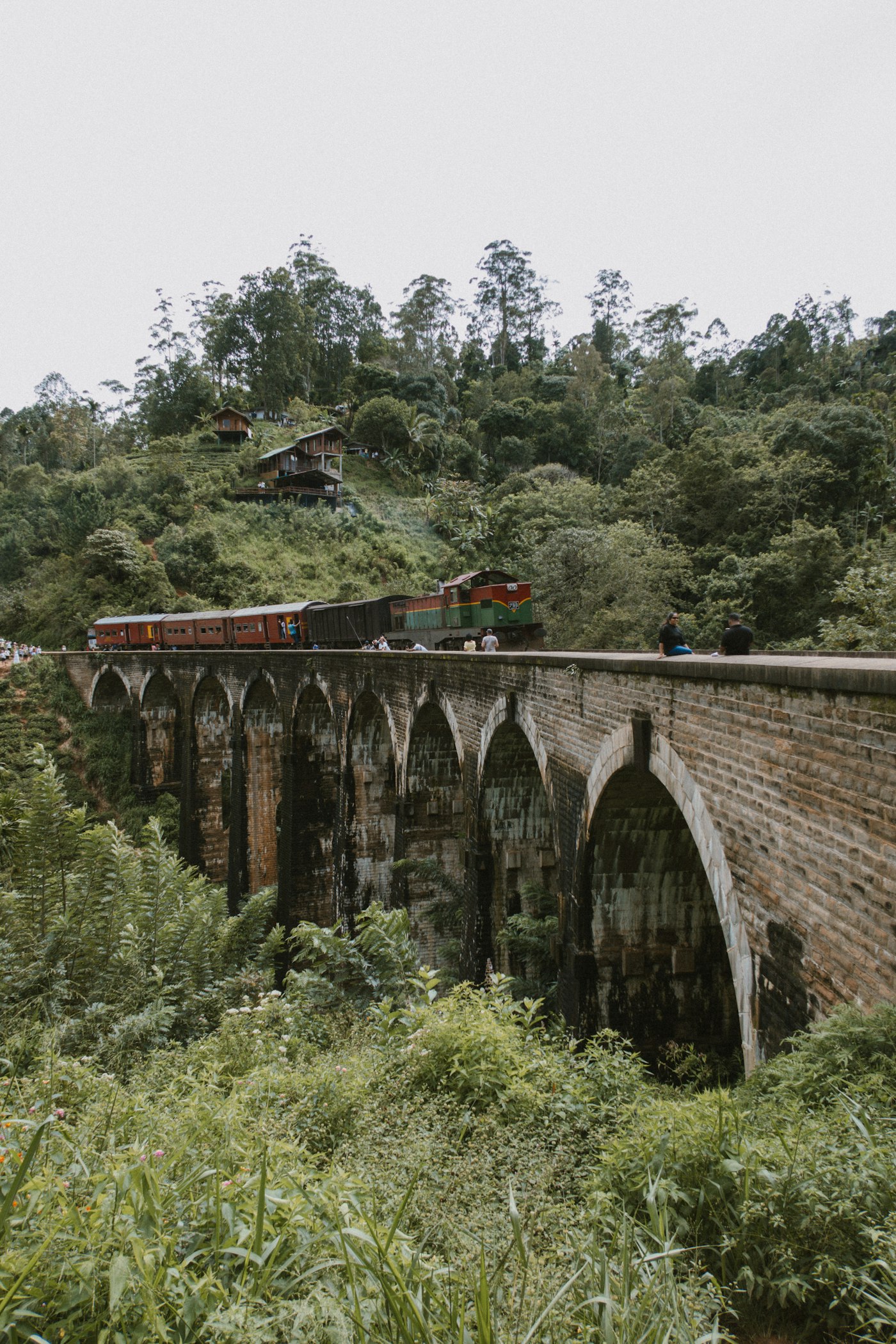
The Demodara Nine Arch Bridge is one of those rare structures that looks impossible even when you're standing on it. Nine arches of stone, brick, and cement — not a single steel beam — spanning a 30-meter-deep valley through some of the most dramatic terrain in Sri Lanka's hill country.
It was completed in 1921, during the First World War, when steel shipments from Britain had ceased. The colonial engineers declared the bridge impossible without steel reinforcement. Local legend says it was a young Sri Lankan named P.K. Appuhamy who proved them wrong.
The Valley Below
Everyone photographs the bridge from above, from the tea plantation that overlooks the curve. We went below. A farmer's track — unmarked, uneven, threading through vegetable plots and betel gardens — leads to the valley floor.
From below, the bridge is a different thing entirely. The arches rise above you like the ribs of a cathedral, each one a perfect curve of hand-laid stone. When a train crosses — the blue carriages appearing and disappearing between columns of masonry — the vibration runs through the ground and into your bones.
The Engineering
What makes the Nine Arch Bridge remarkable is not just the absence of steel but the precision of its construction. Each arch is a self-supporting structure — remove one and the others stand. The cement was mixed on-site using local limestone. The stones were carried by hand from a quarry three kilometers away.
The bridge has survived earthquakes, monsoons, and a century of daily train traffic without significant structural repair. It is, quietly, one of the great engineering achievements of the colonial era — and one built by the colonized.
"They said it couldn't be done without steel. He said watch me. And here it stands, a hundred years later." — Station Master, Demodara
Visiting the Bridge
- By train: The bridge is between Ella and Demodara stations on the main hill country line
- On foot: A 20-minute walk from Ella town along the railway track
- Best time: Early morning for mist, or 9:15 AM when the first train crosses
- Below the bridge: Ask locals for the path to the valley — it's not signposted but everyone knows it