Tea Trails: Walking the Emerald Highlands
The Green That Defines a Nation
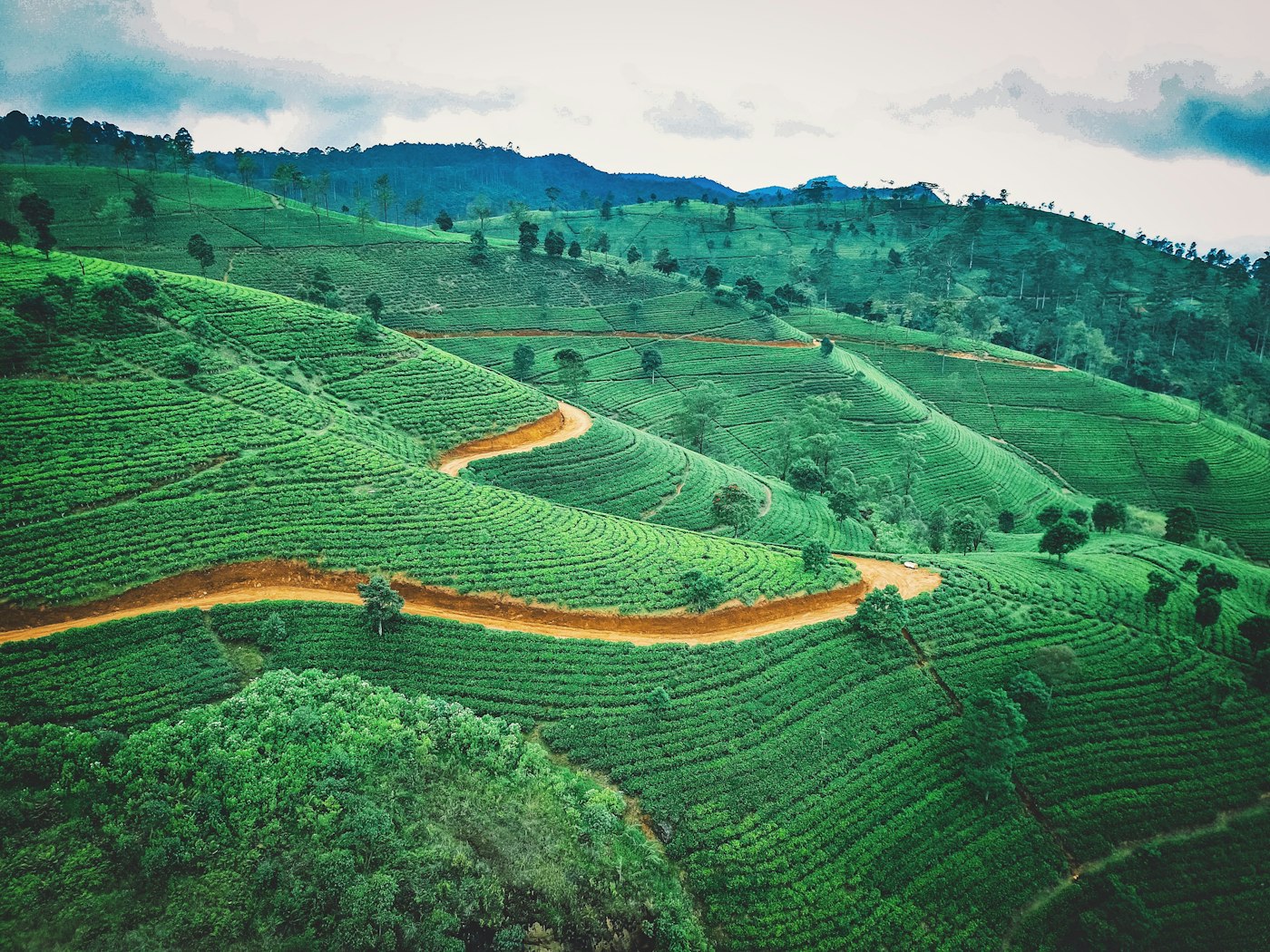
Sri Lanka's tea country is not one landscape but a thousand — each hill folded into the next like crumpled velvet, every shade of green the earth can produce layered from valley floor to cloud line. To walk through it is to understand why the British fought so hard to possess it.
Above 1,800 meters, where the air thins and mornings begin in white mist, the tea bushes grow slowly. This is where the finest leaves are born — stressed by altitude, enriched by cool nights, plucked by hands that have repeated the same motion for generations.
The Pluckers' Path
We followed Lakshmi, a third-generation tea plucker, along the narrow paths between rows. She moved with a rhythm that was almost musical — two leaves and a bud, two leaves and a bud — her fingers selecting with a precision no machine has replicated.
"My grandmother walked this same row," she told us, adjusting the heavy bag slung across her forehead. "The bushes are the same ones. They just keep growing."
The Tamil community brought to Sri Lanka's highlands by British planters in the 19th century remains the backbone of the tea industry. Their story — of displacement, labor, and quiet endurance — is inseparable from every cup of Ceylon tea.
"People drink our tea in London and Tokyo and New York. But they don't see these hills. They don't see these hands." — Lakshmi, Tea Plucker, Pedro Estate
Inside the Factory
The old factories are cathedrals of industry — cast-iron machines from the 1920s still rolling, oxidizing, and drying leaves in a process that hasn't fundamentally changed in a century. The air inside is warm and sweetly vegetal, thick with the scent of withering leaves.
At Pedro Estate, the factory manager showed us the difference between broken orange pekoe and silver tips — the latter plucked only on full moon days, dried to a pale gold that sells for over $100 per kilogram.
Walking the Trails
- Best months: January through March for clear skies and cool temperatures
- Distance: The Pekoe Trail offers 22 stages covering 300km of marked paths
- Stay: Colonial-era bungalows converted to guesthouses offer authentic atmosphere
- Taste: Ask for a factory visit — most estates welcome visitors in the morning